13 Jan2026
Written by Naller. Posted in Headphones
Ever wondered why your expensive new sound system doesn’t quite sing the way it did in the showroom? Or perhaps you’ve upgraded your home theater, only to find the audio feels…off? The culprit might not be your gear, but its position. Speaker placement is arguably the most overlooked yet impactful aspect of achieving truly great sound, often transforming a good system into a breathtaking one. It’s a bit like making a Michelin-star meal and then serving it on a paper plate – the quality is there, but the presentation lets it down. In this article, we’ll dive into the surprisingly simple yet profound art of situating your speakers for optimal performance, offering practical tips that will elevate your listening experience from satisfactory to sensational.
The Sweet Spot: Unveiling the Stereo Triangle
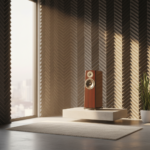
For stereo setups, the holy grail of speaker placement is the “equilateral triangle.” Imagine your listening position (your head, ideally) as one point, and each speaker as the other two. The goal is to form a perfect triangle where the distance between you and each speaker is equal to the distance between the two speakers themselves. This ensures a balanced soundstage, allowing instruments and vocals to be precisely localized, creating an immersive “phantom center” where the lead singer appears directly in front of you, even without a center channel speaker. Don’t be afraid to pull your speakers away from the wall – typically, 2-3 feet is a good starting point. This minimizes bass boominess caused by sound waves reflecting off surfaces and gives your audio room to breathe. Experiment with toe-in, which is the angle at which your speakers face your listening position. A slight toe-in (speakers angled inward, crossing just behind your head) often enhances focus and imaging, but too much can shrink the soundstage. Trust your ears here; what sounds best to you is ultimately what matters most.
Battling Bass: Taming Room Acoustics
Bass can be a tricky beast. Too much, and your music sounds muddy; too little, and it lacks punch. Your room’s dimensions and furnishings play a huge role in how bass behaves. Corners are notorious for amplifying bass frequencies, leading to an exaggerated, boomy sound. If your speakers are currently nestled in corners, try moving them out. Conversely, if your bass feels thin, positioning a subwoofer closer to a wall (but not directly in a corner) can sometimes provide a boost. Hard surfaces like bare walls, glass, and hardwood floors reflect sound, causing echoes and harshness. Soft furnishings – think carpets, curtains, and upholstered furniture – absorb sound, helping to dampen reflections and create a more natural, balanced sound. Even strategically placed bookshelves filled with books can act as diffusers, breaking up sound waves and preventing them from bouncing back in a uniform, problematic way. Small, affordable acoustic panels can also make a significant difference, especially in dedicated listening spaces.
Beyond Two Channels: Optimizing Surround Sound
For home theater enthusiasts, multi-channel speaker placement is crucial for truly immersive experiences. A typical 5.1 setup involves front left, center, front right, and two surround speakers, plus a subwoofer. The center channel, dedicated to dialogue, should be placed directly above or below your TV, as close to the screen as possible. Your surround speakers, responsible for ambient effects, should ideally be placed slightly behind and to the sides of your main listening position, elevated a foot or two above ear level. This creates a more enveloping sound field without distracting from the on-screen action. Avoid placing surrounds directly beside you or in front, as this can pull effects forward and disrupt the illusion of sound coming from all around. For larger rooms or more complex setups (like 7.1 or Dolby Atmos), consulting the specific manufacturer’s guidelines and experimenting with angles and heights becomes even more important. Remember, the goal is always to create a cohesive soundscape where individual speakers disappear, and you’re left with a believable sonic environment.
06 Jan2026
Written by Naller. Posted in Headphones
Ever wondered why your expensive new speakers don’t sound as good at home as they did in the store? The secret might not be the speakers themselves, but where you’ve placed them. Speaker placement is often overlooked, yet it’s one of the most critical factors influencing sound quality in any home audio setup. This article will guide you through the fundamental principles of speaker positioning, helping you transform your listening experience from ordinary to extraordinary, without needing to upgrade a single piece of equipment.
The Golden Triangle: Your Sonic Sweet Spot
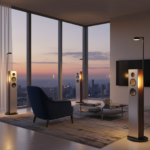
The “golden triangle” is the cornerstone of optimal stereo speaker placement. Imagine an equilateral triangle: your listening position (your head) forms one point, and your two main stereo speakers form the other two points. Each side of this triangle should ideally be equal in length. This setup ensures that the sound from both speakers arrives at your ears simultaneously and with equal intensity, creating a focused and immersive stereo image. While a perfect equilateral triangle is the ideal, slight variations can work depending on your room’s dimensions. Experiment with moving your listening position forward or backward a few inches until the soundstage feels cohesive and centered.
Beyond the Triangle: Walls, Corners, and Toeing In
Once you’ve established your golden triangle, it’s time to consider the room itself. Walls, especially those directly behind the speakers, can significantly impact bass response. Placing speakers too close to a wall often exaggerates bass, making it boomy and uncontrolled. As a general rule, try to keep bookshelf speakers at least 6-12 inches away from the back wall, and floorstanders even further, perhaps 1-3 feet. Corners are even worse offenders, notoriously boosting bass to an undesirable degree. Avoid placing speakers directly into corners unless your room acoustics demand it. “Toeing in” refers to angling your speakers slightly inwards towards your listening position. This can enhance the stereo imaging and focus the soundstage. Start with the speakers facing straight ahead, then gradually toe them in a few degrees at a time, listening for improvements in clarity and instrument separation. Be careful not to over-toe, as this can make the sound too narrow and lose its spaciousness.
Common Mistakes to Avoid: From Clutter to Unevenness
One of the most common mistakes is placing speakers on cluttered surfaces or among objects that can reflect or absorb sound. Ensure the area immediately surrounding your speakers is as clear as possible. Bookshelves, plants, and large pieces of furniture can all interfere with sound wave propagation. Another frequent oversight is placing speakers at uneven heights or using unstable stands. Speaker tweeters (the small drivers responsible for high frequencies) should ideally be at ear height when you’re in your primary listening position. Wobbly stands can introduce unwanted vibrations that degrade sound quality; invest in sturdy, well-damped stands for bookshelf speakers. Finally, remember that every room is unique. While these guidelines provide a fantastic starting point, the absolute best placement for your speakers will involve a bit of trial and error. Don’t be afraid to experiment! Spend an afternoon moving your speakers, even by small increments, and actively listening to the changes. You’ll be surprised at the difference a few inches can make. By understanding and applying these simple principles, you’ll unlock a richer, more detailed, and utterly captivating listening experience, transforming your home audio from good to truly great.
30 Dec2025
Written by Naller. Posted in Headphones
Ever wonder why your new headphones sound great on one device but underwhelming on another? Or why that detailed track still feels a little flat? It’s not always the headphones themselves. This article will help you unlock the full sonic spectrum your headphones are capable of, guiding you through hidden settings, surprising accessories, and simple tweaks to elevate your listening experience from good to absolutely glorious.
The Power of the Source: Why Your Device Matters
Many assume headphones are the sole determinant of sound quality. While crucial, the device driving them – your smartphone, laptop, or dedicated audio player – plays an equally vital role. Lower-quality audio outputs can struggle to deliver enough power or maintain signal integrity, resulting in a thin, lifeless sound, even from premium headphones. Look for devices with dedicated DACs (Digital-to-Analog Converters) and amplifiers, which transform digital audio into a robust, clean analog signal. Think of it like a chef and ingredients; a great chef (headphones) can only do so much with subpar ingredients (your device’s audio output).
Beyond the Defaults: Essential Software Tweaks
Most operating systems and music apps come with default audio settings that are, frankly, mediocre. Dive into your device’s sound settings! On Windows, explore “Sound Control Panel” and ensure your playback device properties are set to the highest possible sample rate and bit depth (e.g., 24-bit, 96000 Hz or higher if available). On macOS, check Audio MIDI Setup for similar options. Don’t forget about equalization (EQ). While a flat EQ is often considered “accurate,” a gentle adjustment can tailor the sound to your headphones and personal preference. Experiment cautiously – a little goes a long way. Many music streaming apps also offer their own EQ settings. Avoid excessive bass boosts or treble spikes, which can introduce distortion and listener fatigue. A common mistake is to over-equalize; aim for subtle enhancements, not drastic overhauls.
The Unsung Heroes: Amplifiers and DACs Explained
If your headphones are high-impedance (often over 50 ohms) or simply sound quiet even at max volume, a dedicated headphone amplifier can be a game-changer. An amplifier provides the necessary power to drive your headphones effectively, resulting in greater clarity, dynamics, and a more expansive soundstage. Similarly, an external DAC bypasses your device’s potentially inferior internal DAC, delivering a cleaner, more accurate conversion of your digital music file. You can find excellent portable DAC/amp combos that fit in your pocket, or desktop units for a more premium home setup. For beginners, a simple USB DAC stick can offer a noticeable improvement without breaking the bank. Think of it as giving your sound a clear, unobstructed highway instead of a bumpy dirt road.

23 Dec2025
Written by Naller. Posted in Headphones
Ever wondered if there’s a secret handshake among music lovers that unlocks a richer, more immersive listening experience? While that might be an exaggeration, there *is* a key piece of audio equipment often overlooked by the casual listener: open-back headphones. Forget the noise-cancelling trend for a moment, and let’s delve into why these sonic marvels might just be the upgrade your ears have been craving.
The Soundstage Revelation: Beyond Your Head
One of the most striking differences you’ll notice with open-back headphones is the expansive “soundstage.” Unlike their closed-back counterparts, which enclose your ears and restrict sound, open-backs feature perforated or vented earcups. This design allows sound to escape outwards, creating a more natural, “out-of-head” listening experience. Imagine listening to a live band: the drums are clearly to your left, the vocals upfront, and the guitar playing from the right. Closed-backs often compress this spaciousness, making everything feel like it’s originating from inside your skull. Open-backs, however, trick your brain into perceiving a wider, deeper, and taller soundscape, making instrument separation and atmospheric elements truly shine. This is particularly noticeable in genres like classical, jazz, and even well-produced rock, where the intricate layering of instruments is crucial to the artistic intent.
Comfort Redefined: Airflow and Extended Listening
Beyond the auditory benefits, open-back headphones also offer a significant advantage in comfort, especially during prolonged listening sessions. The open design allows for greater airflow, preventing that sweaty, stuffy feeling often associated with closed-back headphones. This breathability not only keeps your ears cooler but can also reduce the feeling of pressure build-up, making them ideal for long workdays, gaming marathons, or simply getting lost in an album from start to finish. For those sensitive to ear fatigue or prone to sweating, the comfort difference can be a game-changer, allowing you to enjoy your music without discomfort becoming a distraction. Think of it like comparing a well-ventilated room to a stuffy one – your ears will thank you.
The Trade-Off: Your Sonic Sanctuary or Shared Sound?
Now, it wouldn’t be a balanced discussion without acknowledging the primary “downside” of open-back headphones: sound leakage. Because their design allows sound to escape, open-backs are not ideal for noisy environments or situations where you need to keep your music private. Think office environments, public transport, or libraries – anyone nearby will likely be able to hear what you’re listening to, albeit faintly. This is where closed-back headphones, with their superior noise isolation, truly excel. Therefore, the decision between open and closed-back often boils down to your primary listening environment. If your home office, personal listening space, or studio is a relatively quiet sanctuary, open-backs are a compelling choice. However, if you’re a commuter or work in a bustling environment, the privacy and isolation of closed-backs will likely be more practical. Consider your typical listening habits before making the leap, as choosing the right tool for the job is paramount for optimal enjoyment.
Choosing Your First Open-Back: A Gentle Introduction
If you’re intrigued by the open-back world, you don’t need to break the bank to experience their magic. Brands like Philips, Sennheiser, and Audio-Technica offer fantastic entry-level options that deliver excellent sound and comfort without a hefty price tag. Look for models like the Philips SHP9500, Sennheiser HD 599, or Audio-Technica ATH-AD700X as great starting points. When you first try them, pay attention to the width of the sound, the clarity of individual instruments, and the overall “airy” feel. Don’t be surprised if your favorite tracks suddenly reveal nuances you’ve never heard before. Avoid comparing them directly to noise-cancelling headphones in terms of isolation; their purpose is fundamentally different. Instead, focus on the sonic presentation and the immersive qualities. Embrace the soundstage, enjoy the comfort, and prepare to rediscover your music collection in a whole new light.
16 Dec2025
Written by Naller. Posted in Headphones
Ever wonder why your favorite song just doesn’t hit the same at home as it does in your car or through a friend’s setup? It’s not always about the most expensive gear, but how you use and optimize what you have. This article will guide you through practical steps to elevate your home audio experience, focusing on simple adjustments and understanding foundational concepts, turning your living room into a sonic sanctuary without breaking the bank.
The Invisible Enemy: Room Acoustics & Placement
One of the most overlooked aspects of great sound is your listening space itself. Hard, reflective surfaces like bare walls, windows, and hardwood floors can bounce sound around, creating echoes and muddying the audio. Conversely, soft furnishings such as rugs, curtains, and upholstered furniture absorb sound, reducing harsh reflections. Experiment with speaker placement too. Spacing speakers equidistant from your listening position and slightly toeing them in (angling them inwards) can create a more focused stereo image. Avoid placing speakers directly in corners, as this can exaggerate bass, making everything sound boomy and undefined. A common mistake is cramming speakers against a wall; giving them some breathing room often reveals surprising sonic improvements.
Untangling the Web: Demystifying Connections and Cables
Before you invest in exotic cables, ensure your basic connections are sound. Start by checking that speaker wires are correctly connected (positive to positive, negative to negative) and securely fastened. Loose connections can lead to intermittent sound or even damage. For digital connections, HDMI is a versatile and common choice for connecting TVs and receivers, carrying both audio and video. Optical (Toslink) and Coaxial cables are excellent for audio-only digital signals. For analog connections, RCA cables are standard. While debate rages over expensive cables, for most home audio setups, ensuring proper termination and shielding on decent quality cables is far more impactful than chasing audiophile snake oil. A practical tip: minimize cable lengths where possible to reduce potential interference.
The Sweet Spot: EQ, Tone Controls, and Listening Levels
Your amplifier or receiver likely has tone controls (bass and treble) or a more sophisticated equalizer (EQ). These aren’t just for boosting bass; they’re tools to tailor the sound to your room and preferences. If your room is boomy, slightly reducing the bass can bring clarity. If the sound is too harsh or bright, a slight treble reduction can smooth things out. However, less is often more with EQ; subtle adjustments can have a big impact. A common mistake is cranking the bass or treble to extremes, which can introduce distortion and fatigue. Find your “sweet spot” at moderate listening levels first. Loudness compensation, sometimes found on receivers, can be useful for maintaining perceived bass and treble at lower volumes, but turn it off for serious listening. Experiment with small changes and let your ears be the judge. Remember, the goal isn’t to make it *loud*, but to make it *clear and enjoyable*.
By understanding these fundamental principles – taming your room, ensuring solid connections, and judiciously using your audio controls – you can unlock a significantly improved home audio experience. You don’t need a professional setup to enjoy pristine sound; just a little knowledge and a willingness to experiment will transform casual listening into an immersive journey.

26 Jul2020
Written by Naller. Posted in Headphones
When a person is doing workouts regularly, then they need much energy to do all kinds of workouts. Daily work outs either moving to gym or performing them in home itself have numerous benefits.

09 Jun2020
Written by Naller. Posted in Headphones
Whether you want to keep out the noises or just listen to your favourite music while sleeping, the headphones are good choice for you.

15 May2020
Written by Naller. Posted in Headphones
Yes, the noise cancelling headphones can be used without music too. Over the past few decades, the technology has come quite a long way, especially for personal listening devices such as headphones.